
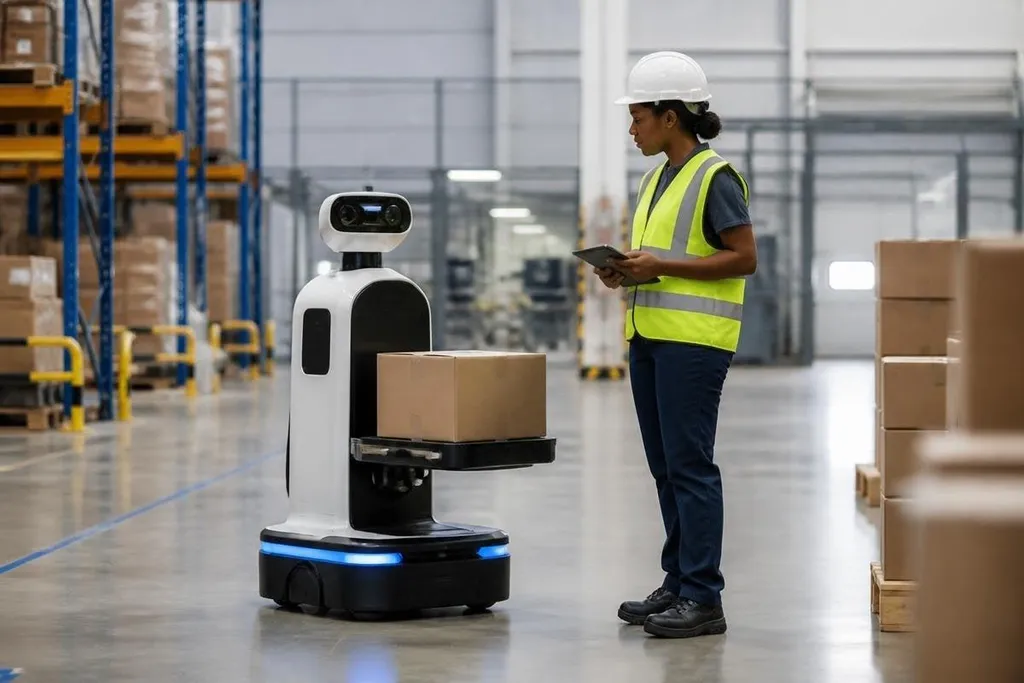
A workplace robot can move stock, inspect equipment, or guide a person through a task. The hard question starts when its sensors, logs, and decisions affect a worker’s safety, privacy, pay, or job.
This article looks at the rights that need protection as robots enter more workplaces, and the questions a manager should answer before installation.
Quick read
- Robot safety includes the people working beside it, not only the machine’s own limits.
- Camera and location data need a clear purpose, access rule, and deletion date.
- Workers need a way to challenge a machine-led decision.
Safety belongs to the whole work area
Safe operation depends on the space around the robot. A mobile robot may slow near a person, stop when a sensor detects an obstacle, or follow a marked route. That protection can fail when a box blocks a sensor, a route changes, or a worker reaches into its path.
The risk changes with the task. A robot carrying a heavy load needs a clear separation from people. A camera robot working near desks raises a different concern because it can observe people who are not part of its task.
Safety rules need more than a start-up test. The company should record who can stop the robot, how a fault gets reported, and what happens after a software or route change. Workers also need training that matches the actual system, including its stop button and warning signals.
A machine that stops safely but leaves people unsure how to report a fault has not solved the whole safety problem.
Data can change the balance of power
Workplace robots often create records as they do their jobs. A vision system may store images. A mobile robot may log its position. Software may record task times, stop events, or operator actions.
Those records can help repair a fault or check a safety event. They can also become a tool for constant worker scoring if the company keeps every record and uses it for a new purpose later. The machine does not need to make a formal decision for its data to affect a person’s work.
A clear policy should state what the robot records, why it records it, who can see it, and how long the records remain available. Rules differ by country, contract, and workplace, so a general promise about privacy cannot replace local legal advice.
Those privacy rules matter even more when robot records enter a worker review. A manager may use scan times or route logs to judge performance, so workplace robotics reporting from Robot24.com can show how data enters the decision and where a worker can ask for human review.
Workers need a human route to challenge decisions
The system may assign tasks, flag a missed step, or send a report to a supervisor. It may be fast, but its record can lack the reason behind a worker’s action. A blocked aisle, a faulty sensor, or a task outside the worker’s training may look like poor performance in the log.
That is why a worker needs access to the record behind a serious decision and a way to ask for a review. A supervisor should be able to pause the machine’s recommendation while checking the facts.
I think a human review should be required when robot data may affect discipline, pay, access to work, or dismissal.
This rule also helps managers. A review can find a bad sensor setting or a poor task design before the same error affects more people.
Responsibility must remain clear
Buying a robot does not remove responsibility from the company, system maker, software supplier, or supervisor. Each party may control a different part of the risk, so the contract and operating plan should name those duties in plain language.
Workers should know who owns the data, who fixes faults, and who reports an injury or near miss. They should not have to guess which company to contact when several suppliers share the system.
The same care applies during job changes.
A new machine may remove some tasks and create others, such as maintenance, system checks, or robot supervision. A fair plan explains the change early and gives people a way to raise concerns before the new process starts.
A workplace robot rights checklist
Use these points before a robot begins regular work:
- Map the contact points: mark where people meet the robot and what happens if the route or task changes.
- Set data limits: list each record, its purpose, its access list, and its deletion date.
- Name the reviewer: give workers one person or team that can check a robot-led decision.
- Test fault reports: run a drill for a blocked sensor, unsafe movement, and a false performance flag.
- Review the contract: state who handles repairs, data requests, injuries, software changes, and job changes.
These checks turn broad rights into tasks someone can verify. They also give workers a record to use when the system behaves in a way the plan did not cover.
The next workplace rulebook will need a line for the robot, but a named human must remain beside it. If a machine can affect a person’s work, that person needs a clear safety rule, a data boundary, and a real route to review.